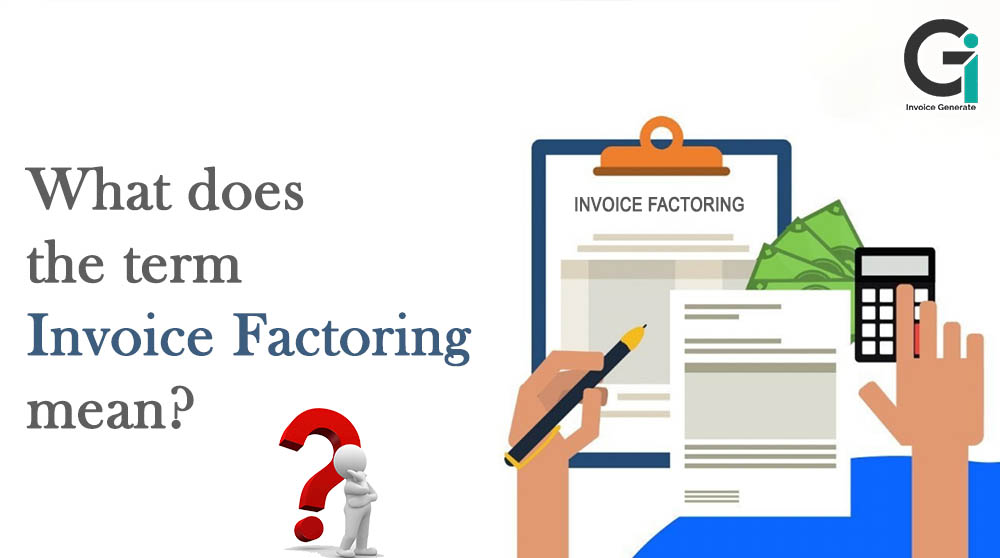
What does the term invoice factoring mean?
In case you are running a small business and money problems continue to plague your life, then this article is for you. In this article, we will discuss a term called invoice factoring. There are different kinds of businesses booming in the financial landscape. Some of them prefer to get paid in advance, some of them get paid upfront, while some have to wait quite a while to get what they are owed.
Waiting for the money to come in can be hard and can take a toll on your business. That’s when invoice factoring comes along. Invoice factoring is a way to get your money faster. We know you are impatient to learn what this golden term actually is so without further ado, let’s dive into the universe of invoice factoring and learn how it benefits businesses.
Invoice Factoring: What is It and How Can One Use It?

Invoice factoring is a financial transaction in which a business sells its unpaid invoices to a third party or a factoring company in order to get paid upfront. The factoring company pays the business most of the invoice money upfront. Later, the factoring company collects the full amount from the client.
Invoice factoring is helpful for businesses that have some pending dues and cannot wait long for the clients to pay. Small and medium-sized businesses mostly make use of invoice factoring to get paid. Invoice factoring allows businesses to manage cash flow, pay workers, and buy supplies easily without putting a strain on their budget.
Cost of Invoice Factoring
The cost of invoice factoring varies and depends on the factoring companies. Based on the amount of invoice, factoring companies can charge a fee that can lie anywhere between 1 percent to 5 percent per month. Other fees like service fees and factoring agreement fees might also be applicable. However, the specific fee depends on the following things:
- The amount of the invoice
- How much sales a business makes
- Customer creditworthiness
The type of factoring agreement also has an impact on the cost of factoring. Two types of factoring agreements exist i.e., recourse and non-recourse. A recourse agreement is one in which the customer doesn’t pay the invoice to the factoring company, rather the business has to pay the money back to them. Whereas, in a non-recourse agreement, the factoring company takes all the risk which means that in case the customer does not pay, the company bears the loss. As the risk is high in this case, non-recourse agreements often have hefty fees.
How can Invoice Factoring Benefit Businesses?
In case your business waits for the customers to pay their invoices, cash flow issues might arise. This is where invoice factoring makes its cameo. With invoice factoring, businesses get money fast without having to wait for, 30, 60, or 90 days. This money can then be used to buy equipment, pay workers, and keep business operations smooth. Given below are six key benefits that invoice factoring offers to businesses:
Easy Process, Quick Payment – With invoice factoring, businesses get paid fast, usually within a week. Invoice factoring is a must better alternative to getting a loan, especially if you do not have perfect credit.
No Debt, Just Payment – With invoice factoring businesses can turn their unpaid invoices into money without the addition of debt. This means that you get paid money that you are owed without delay, allowing you to manage your business and finances better.
Less Work – As the factoring company deals with collecting unpaid invoices, the workload on businesses decreases. This allows them to focus their time and negeri on important things.
Flexible and Accessible Funds – The money one gets after selling the unpaid invoices to a factoring company can be used for anything. Invoice factoring is a great option for small businesses as it allows them to maintain their cash flow.
Great for the Image of Business – By opting for invoice factoring, you will make your business look a lot more stable. The stability of your business will in turn impress the investors and will also help you pay your bills on time, which will have a positive impact on your credit.
A Shield Against Unpaid Bills – As invoice factoring checks the credits of the customers and handles the collection of bills, it aids in the reduction of the risk of not getting paid. Moreover, it also helps keep the money flow more stable.
Advantages and Disadvantages of Invoice Factoring
|
Advantages |
Disadvantages |
|
Invoice factoring improves cash flow by converting waiting invoices into quick cash. |
Invoice factoring comes with a hefty price tag. There are different fees that are associated with it like application fees, termination fees as well as fess for credit checks. |
|
It aids in the growth of business by maintaining a healthy cash flow, allowing businesses to take on more opportunities without hesitation. |
Invoice factoring also comes with limitations. Depending on the rules of factoring, sometimes you cannot factor in too many invoices from just one client. This means that you will not get all the cash that you need. This limitation can be a huge headache if you do most of your business with a few big clients. |
|
It boosts productivity by allowing you to concentrate on your business rather on unpaid invoices and financial issues. |
As the factoring company collects the unpaid invoices from the clients, it results in reduced client interaction. Although in hindsight this might seem like a good idea, you won’t know right away if your client is happy with the arrangement or not. |
|
Invoice factoring also helps improve the relationship of a business with its customers. This is because businesses don’t have to chase customers to collect payments, hence maintaining a positive relationship. |
|
|
As invoice factoring facilitates a healthy cash flow, it aids in reducing stress for both the business and employs. |
|
|
Invoice factoring also streamlines the budgeting process. |
|
|
As invoice factoring promotes stable finances, it allows one to look and plan ahead for the growth of business. |
|
How to Select the Best Invoice Factoring Company?
When picking an invoice factoring company, follow the steps given below:
Experience of the Factoring Company – Before selecting a factoring company, make sure to check how long they have been in business. If the company is well-established that means that they are trustworthy and reliable.
Terms, Conditions, and Fees – Before shaking their hand, make sure to understand their terms and conditions, charges, funding limits, and fees. Do not make a decision based on just the main fee.
Frequency and Speed of Funding – When looking for a factoring company make sure to check how often and quickly, they will fund your invoices. This assessment is vital as it will have an impact on your cash flow.
Interaction with Customer – Good customer service is a must in any business, therefore before you opt for a factoring company find out how they will interact with your clients.
Source of Funding – When settling on a funding company, try to find out if they are a bank or an independent middleman as both have their own pros and cons.
Flexibility – Determine how flexible they are in their dealings. Check if they allow you to select specific invoices for factoring and also if they offer short-term contracts. The flexibility of a factoring company is important as it allows them to adapt to the changing needs of your business.
Integrity – Make sure that the factoring company you select is honest and transparent about their services as well as fees.
When Should One Consider Invoice Factoring?
If you aren’t sure whether invoice factoring is the good route for your business or not, consider the following aspects and if you fall in even one of them, then invoice factoring is the way to go:
- If you struggle with cans flow.
- If you wish to streamline the process of invoicing.
- If you waste a lot of time chasing unpaid invoices.
- If you are missing out on big opportunities because you don’t have enough money.